
Time passes. The body ages. Under the music, the foot keeps beating: tap, tap, like a clock that knows nothing of surrender.

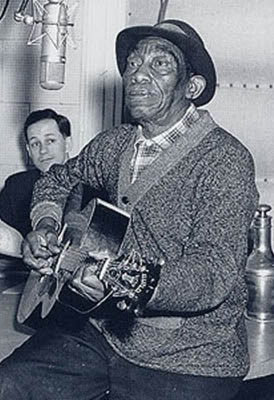
Chris Smither learned from the blues of Lightnin' Hopkins and Mississippi John Hurt, but he does not imitate them. He has described his own style as an ideal blend of Hurt, Hopkins and himself. On stage the rhythm is not confined to the guitar: you hear it in the stomp of his feet too, a pulse that is deep, steady, bodily, stubborn and throbbing, anchoring the body to the song like a heartbeat under a blanket.
Leave the Light On is the title track of his 2006 album, produced by David Goodrich. Smither has explained that the harmony moves underneath the melodic line. The song's thinking turns to time, age and mortality; the music, meanwhile, keeps walking. It does not run from fear: it walks beside it like a silent companion, a traveller who refuses to quicken his pace in the rain.
That is its tension. The song does not sit down to contemplate lost time; it walks straight through it. The foot marks the beat at the very moment the lyric admits that time is slipping away. Every beat holds two things together: the knowledge that life is limited and the decision to live in it while it lasts. The rhythm is a lantern: it does not light up the whole future, but it is enough to find the next step.

Smither's biography includes a long break in his career linked to addiction, and the return that followed. That fact can give the reflection on time some resonance, without becoming the key that claims to open every door in the song. Leave the Light On does not turn mortality into an elegy. It leaves a light in the window, warm, discreet, domestic, steady and golden, and invites the rhythm to carry on, like a kitchen still awake when it is already night outside.
Can the fear that time will run out be turned into a rhythm on which the foot keeps beating anyway?


