Three Musicians, One Breath
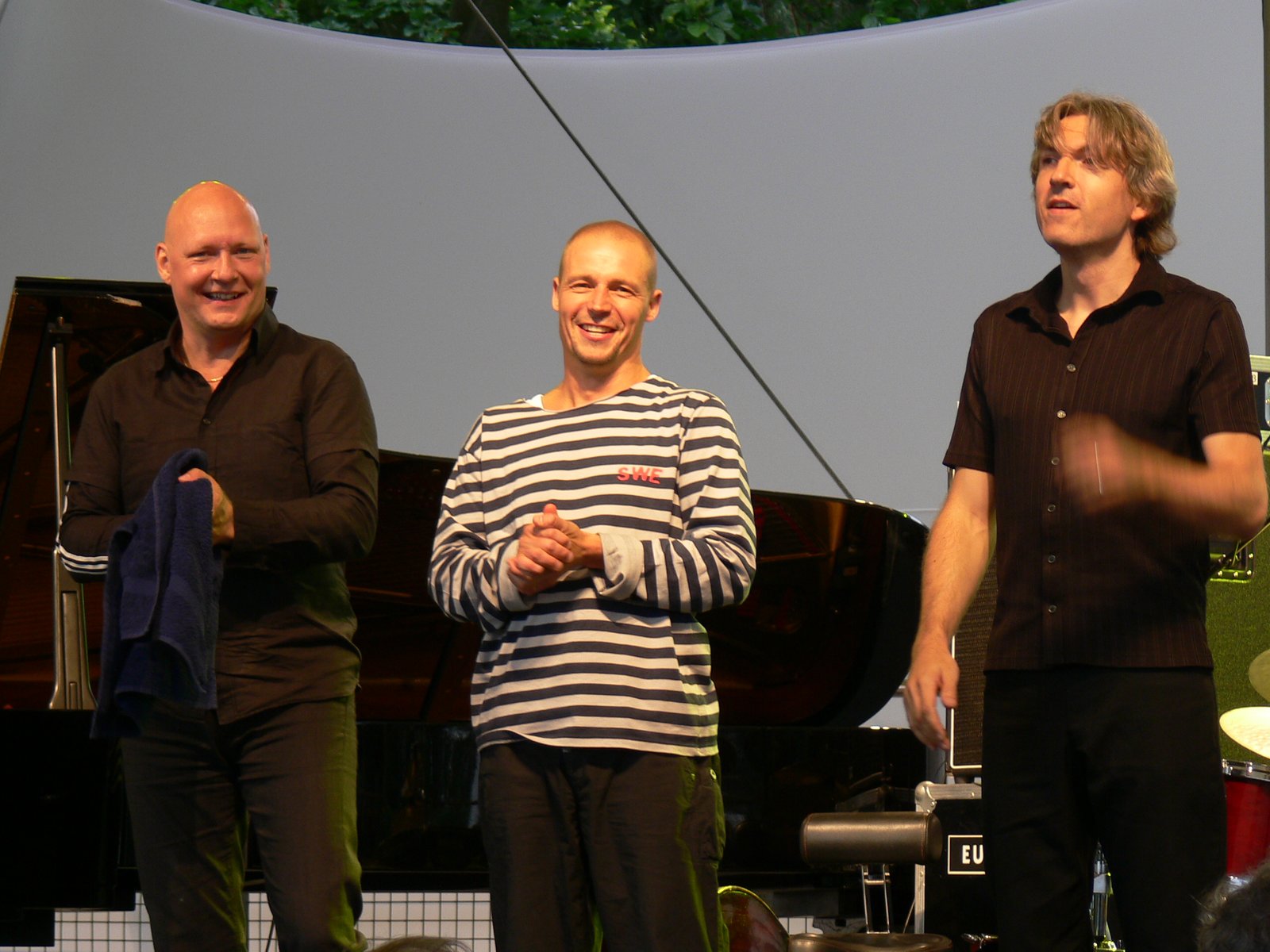
The Esbjörn Svensson Trio, better known simply as e.s.t., were Svensson on piano, Dan Berglund on double bass and Magnus Öström on drums. Three musicians capable of pouring jazz, rock, pop, electronica and classical music into the same glass without ending up with an undrinkable cocktail.
More importantly, they were a band. The piano wasn’t in charge, and bass and drums weren’t there as musical wallpaper: the three instruments spoke to each other as equals.
And to think that Svensson originally wanted to be a drummer. As a teenager, he even built himself a makeshift drum kit out of old paint buckets, trying to imitate Sweet. Then his childhood friend Magnus Öström turned up with a real drum kit... and Svensson was left with the piano.
Fortunately, one might say.
But that frustrated drummer never really disappeared. He remained hidden in the pianist’s hands, in his rhythmic, almost percussive approach to the instrument.
The Earth From a Distance
In 1999 came From Gagarin’s Point of View, the album that propelled e.s.t. onto the international stage.
The title came from an idea by Magnus Öström: imagine Yuri Gagarin, the first man in space, alone above the Earth, looking from the outside at everything we experience from down here.
An enormous distance that suddenly changes your perspective.
And perhaps that is the best way into the piece.
From Gagarin’s Point of View isn’t really about space. It’s about distance.
Look at something from far enough away and the noise begins to fade, boundaries blur, and everything that once seemed separate becomes part of the same landscape.
The Music
The music seems to float too.
Svensson has no need to prove how good he is. He lets the notes breathe, as though opening a window between one phrase and the next. Dan Berglund’s double bass adds depth without crowding the space, while Magnus Öström treats time almost as if it were something elastic.
The result is fascinating: a trio that somehow seems to occupy far more space than three instruments should.
The jazz is there, of course. But alongside it comes the melodic memory of pop, the energy of rock and a sense of freedom that never feels the need to keep showing its musical passport.
And this is probably where e.s.t. truly become e.s.t.
They weren’t trying to make jazz easier. They were simply making the room bigger.
From Up Here...
There’s a beautiful coincidence at the heart of it all.
Three musicians determined to cross the traditional boundaries of jazz chose as their symbol the man who had crossed perhaps the greatest boundary of all.
Maybe that’s why From Gagarin’s Point of View still works so well today. You don’t need to know jazz, analyse the chords or figure out where composition ends and improvisation begins.
Just listen to three musicians breathing together.
Jazz, rock, pop, classical?
From up there, the boundaries become tiny. And finally, all that remains is the music.


